
Asphalt Shingles vs Metal Roofing: How Do You Decide?
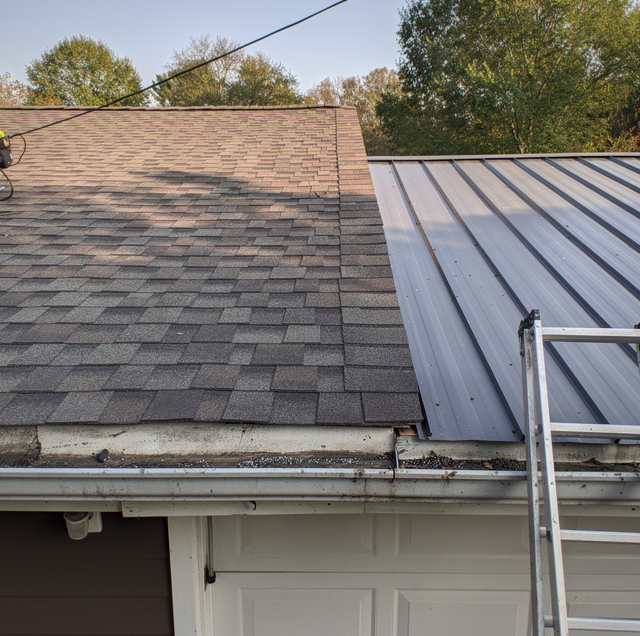
You are standing in the driveway looking up at a roof that has clearly seen better decades, and two names keep coming up in every conversation: asphalt shingles, the material almost every neighbor already has, and metal roofing, the option people say they wish they had chosen sooner. Both will keep water out of your attic. Past that, they behave like two different products solving the same problem in almost opposite ways, and the choice shapes how your roof performs for decades ahead.
This is not a question with one correct answer for every house. It has the right answer for your house, roof pitch, attic ventilation, climate exposure, and how long you plan to stay put. The way to get there is to compare the two materials feature by feature rather than picking based on which one a friend chose.
What These Two Roofing Materials Actually Are
Asphalt shingles are individual overlapping tabs made from a fiberglass mat coated in asphalt and topped with mineral granules. They install in courses that run up the slope, each row overlapping the one below it, and the granules do double duty: protecting the asphalt from ultraviolet breakdown while giving the roof its color and texture. Nearly every subdivision built in the last sixty years leans on this material because it is familiar, easy to source, and simple for a crew to install on a standard pitched roof.
Metal roofing covers a wider range of products than most people realize. Standing-seam panels run in long, continuous lengths from ridge to eave with raised seams that lock adjacent panels together, while metal shingles and stone-coated steel tiles are cut to mimic shingles or slate but install more like interlocking panels than traditional shingle courses. Both versions shed water off a smooth or ribbed surface rather than relying on layered overlap.
Comparing Asphalt Shingles And Metal Roofing At A Glance
The table below lists the factors that matter most when deciding which roof belongs on your house.
| Feature | Asphalt Shingles | Metal Roofing |
|---|---|---|
| Typical lifespan | 18-25 years for standard three-tab or architectural shingles | 40-60+ years for standing-seam and coated steel panels |
| Weight per square | Roughly 200-300 pounds, adds up fast with multiple layers | Roughly 50-150 pounds, generally lighter per square |
| Install complexity (conceptual) | Familiar course-and-overlap method most crews already know | Panel-seaming and expansion-joint know-how; fewer crews specialize in it |
| Weather resilience | Handles most rain and wind well; vulnerable to hail bruising and wind uplift on aging shingles | Sheds heavy rain fast; strong wind-uplift resistance; can dent under large hail |
| Maintenance needs | Periodic granule loss, algae staining, and moss checks | Occasional seam and fastener checks; less surface degradation over time |
| Aesthetic/style range | Wide color palette, mimics wood shake or slate in architectural lines | Sleek vertical panels or shingle-profile metal that mimics shake, tile, or slate |
Those six rows tell most of the story, but each deserves a closer look.
Lifespan: Two Very Different Timelines
A standard asphalt roof is designed for a service life of roughly two to three decades, depending on shingle grade, installation quality, and the amount of direct sun and heat cycling the roof plane experiences over the years. Premium architectural shingles rate toward the longer end of that range, but a south-facing slope that bakes under strong sun tends to shorten that number in practice, since ultraviolet exposure breaks down the asphalt binder faster than shade does.
Metal roofing changes the math almost entirely. A properly installed steel or aluminum panel system typically lasts 40 to 60 years or longer before it needs replacement, and some coated systems carry warranties that extend even further. The panels do not lose granules, curl at the edges, or crack the way aging asphalt does, so a metal roof usually retires because of fastener wear, seam sealant aging, or coating fade rather than the base material giving out.
If you plan to stay in the house for the long haul, that lifespan gap is the single biggest number in this comparison, because it means you are likely weighing one roof replacement against zero for the rest of your time in the home.
Weight And Structural Load
Asphalt shingles are heavier than most homeowners assume, generally ranging from 200 to 300 pounds per square (a roofing square covers 100 square feet), and that weight only increases if a second layer is installed instead of being torn off first. Older framing was often sized with a single layer of asphalt in mind, so a tear-off and inspection matter more than they seem at first glance, especially on additions or older sections of a house where rafters may already run close to their design limit.
Metal panels typically weigh less per square foot, often between 50 and 150 pounds, depending on gauge and profile, which puts noticeably less continuous dead load on the rafters or trusses. That lighter weight rarely decides the question on its own, since most roofs carry enough margin for either material, but it becomes meaningful on older homes, additions with marginal framing, or any roof where a structural engineer has flagged the frame as tight on capacity.
Installation Complexity, Conceptually Speaking
Shingle installation follows a method nearly every roofing crew already knows: underlayment, starter course, then overlapping courses working up the slope, with flashing details at valleys, chimneys, and penetrations. That familiarity keeps crews plentiful and keeps the work moving on a predictable schedule, because the technique has barely changed in decades.
Metal roofing asks for a different skill set. Standing-seam systems need precise panel measurements, seaming tools that crimp or snap-lock panels together, and an understanding of thermal expansion, since a long panel expands and contracts with temperature swings in ways a shingle tab never has to. Fastener spacing, clip systems that let panels move without buckling, and flashing at ridges and rakes all follow different rules than shingle flashing. None of that makes metal roofing harder, but it does mean the installer's experience with metal panels matters more than it does with shingles, where nearly any licensed crew is qualified by default.
Weather Resilience Under Real Conditions
Both materials handle ordinary rain without much drama, but they diverge once conditions get severe. Heavy, wind-driven storms test wind-uplift resistance more than anything else, and metal panels, when properly fastened, generally outperform aging shingles in sustained high wind, since shingles rely on adhesive sealant strips that weaken with age. A roof well into its expected lifespan is exactly the kind that loses tabs in a severe wind event a newer roof of either material would shrug off.
Hail flips the comparison somewhat. Asphalt shingles absorb hail impact by bruising or losing granules, a repairable and often insurable form of damage. Metal panels resist penetration well but can show cosmetic denting from large hail, and while that denting rarely compromises the roof's ability to shed water, it does change the surface appearance in a way some homeowners weigh heavily, and others barely notice from the ground.
Sustained heavy rain is when metal earns a real edge, since a smooth or ribbed panel surface with fewer seams and no overlapping tab edges sheds volume quickly and reduces the places where wind-driven rain can work its way underneath.
Maintenance Needs Over Time
Asphalt shingles need periodic attention: granule loss calls for a visual check from the ground or a ladder as the roof ages, algae streaking (the dark stains on north-facing slopes in humid climates) benefits from a gentle cleaning, and moss in shaded valleys needs to be kept in check before it lifts tabs and lets water underneath. None of that is difficult work, but it is recurring work that adds up over the roof's life.
Metal roofing needs less routine surface attention, since there is no granule layer to wear away and no shingle mat to absorb moisture. What it does need is an occasional check of exposed fasteners, which can back out slightly over years of thermal expansion, and a look at sealant around penetrations and seams. That is a shorter maintenance list overall, spread across a much longer service life.
Aesthetic And Style Range
Asphalt shingles offer the widest color selection on the market and come in dimensional profiles designed to mimic the shadow lines of wood shake or the texture of slate, which is part of why they remain the default choice for so many traditional home styles.
Metal roofing has closed most of the style gap that once separated it from shingles. Standing-seam panels give a clean, linear look that reads as modern or farmhouse depending on the trim around them, while metal shingles and stone-coated steel tiles are formed and coated to resemble shake, tile, or slate from curb distance, appealing to homeowners who want metal's lifespan and weather performance without an industrial look.
How To Weigh These Factors For Your Own Roof
Start with how long you plan to stay in the house. If the horizon is five to ten years, the lifespan gap matters less, and project scope and matching your home's existing style might carry more weight. If you plan to stay for decades, the lifespan and reduced maintenance load of metal make the stronger case.
Next, factor in your weather exposure. A roof plane that takes direct, sustained wind should place heavy weight on wind-uplift performance. On a roof where large hail is common, weigh cosmetic denting against granule bruising and choose the more tolerable trade-off. Roof pitch matters too, since low-slope sections handle standing water differently by material, and a qualified roofer can flag where that applies on your roof.
Finally, consider your existing framing. On a plain reroof of a sound house, weight differences rarely tip the decision. On an older home, an addition, or any roof already flagged as marginal, metal's lighter weight can simplify the structural side of the project.
Frequently Asked Questions
In many cases, yes, using furring strips or a compatible underlayment system, which can simplify the project. A roofing professional should still inspect the decking underneath first, since hidden rot or excess moisture needs to be addressed before any new roofing is installed, regardless of the material.
With proper solid decking and underlayment, a metal roof is not noticeably louder than an asphalt roof during rain, since sound-dampening comes mostly from the decking and insulation beneath the panels rather than the roofing material itself. Older, unlined metal roofs on outbuildings created that noisy reputation, but a modern residential installation is built differently.
No, metal roofing does not attract lightning strikes at a higher rate than any other roofing material, since lightning targets the tallest nearby point regardless of what the roof is made from. If a strike does occur, metal's non-combustible nature helps dissipate the charge more safely than a combustible roofing surface would.
Metal roofing generally performs well through freeze-thaw cycling because the panels shed snow and ice quickly and have fewer overlapping joints where trapped moisture can freeze and expand. Asphalt shingles handle freeze-thaw cycling too, but ice damming at the eaves poses a bigger risk since water trapped behind a dam can work beneath the shingle courses.
Yes, metal shingle profiles and stone-coated steel panels are designed to mimic the look of wood shake, slate, or tile at typical viewing distances, allowing a traditional-style home to keep its intended appearance while gaining the lifespan and weather performance of metal. Standing-seam panels, by contrast, tend to suit modern or farmhouse-style architecture better than a classic colonial profile.
The decision usually comes down to the age and condition of the undamaged sections along with how the two materials meet at transitions, since mixing metal and asphalt on connected roof planes can create flashing challenges. A roofing professional can inspect the full roof system and lay out whether a partial repair, a full reroof, or a switch to a different material makes the most sense for your structure.
Schedule a roof material consultation — get a professional evaluation of your current roof and a side-by-side recommendation between asphalt shingle and metal roofing options for your home. Eagle Home Renovation Inc. serves Richmond and surrounding areas. License #2705181053. Call (804) 538-3334.
