
The Early Warning Signs of a Roof Leak Most Homeowners Miss
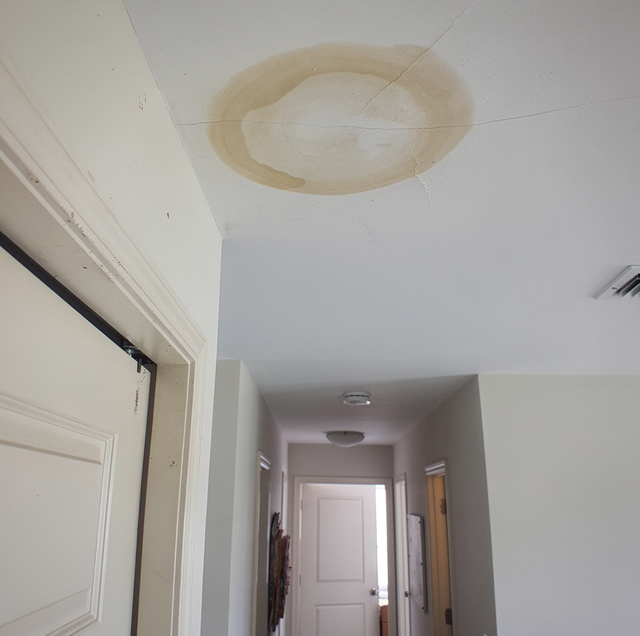
You notice it on a Tuesday morning: a pale yellow-brown ring on the ceiling above the hallway closet, no bigger than a coffee cup lid. It's dry to the touch. There is no dripping, no bucket needed, nothing that feels like an emergency. So you file it away as something to deal with later and go on with your day.
A few weeks earlier, you might have caught a whiff of something musty when you pulled a suitcase out of the attic, a smell closer to wet cardboard than mold, gone as soon as you closed the hatch. Neither of these moments looks like a roof problem. Both of them usually are. Roof leaks rarely start as a dramatic downpour through the drywall. They start small, quiet, and easy to explain away, which is exactly why so many homeowners miss the window when a fix is simple and cheap in effort rather than a full ceiling replacement and a mold remediation call.
Think of a roof leak the way you'd think of a slow tire leak on a car. The tire doesn't go flat the first night. It loses a little air, then a little more, and by the time you notice it visibly sagging, the damage to the sidewall may already be done. A roof works the same way: water finds a weak point, seeps in a teaspoon at a time, and only becomes obvious once it has already soaked the insulation, warped the wood, or stained the drywall in more than one spot.
The Ceiling And Wall Signs Worth Taking Seriously
The most common early clue is a ceiling or wall stain that appears, fades slightly as it dries, and then reappears after the next rain. Homeowners often assume that because a stain isn't actively wet, it isn't active. In reality, intermittent staining that comes and goes with weather is one of the clearest signs of a slow, ongoing leak rather than a one-time spill or old damage.
Watch for these related indicators inside the living space:
- A stain with a darker, more defined ring around lighter discoloration, which suggests repeated wetting and drying cycles rather than a single past event
- Paint that looks bubbled, cracked, or slightly raised, since trapped moisture pushes against paint film from underneath
- Peeling wallpaper or a soft, spongy feel when you press gently on drywall near an exterior wall or under a roof valley
- A faint but persistent musty smell in a bedroom or closet that shares a wall or ceiling with the attic space
- Visible sagging in a ceiling panel, which usually means insulation above has been saturated for some time
Any one of these on its own is worth a look. Two or more together, especially if they show up after storms, point toward moisture working its way through the roof assembly rather than a plumbing or condensation issue.
What An Attic Actually Tells You Before The Ceiling Does
If you have attic access, that space will usually show trouble before your ceiling drywall does, because water often travels along rafters and sheathing before it ever soaks through enough insulation to reach the room below. A quick walk-through with a flashlight can reveal:
- Dark streaking or staining on the underside of the roof deck or along rafters, often following a diagonal path from a higher point down toward the eave
- Insulation that looks matted, discolored, or compressed in one localized patch instead of evenly across the attic floor
- Small beads of moisture or frost on nail tips during cold months, a sign of condensation that can mimic or mask an actual leak
- A musty, damp-cardboard smell that lingers even when the attic is otherwise dry to the touch
- Daylight visible through the roof deck at a seam, vent, or chimney chase, which should never be there
A humid, hot stretch of summer weather puts real stress on attic ventilation. Poorly vented attics trap heat and moisture, which accelerate shingle aging from beneath and can produce condensation that looks a lot like a leak, even before one exists. Checking the attic once or twice a year, especially after the hottest weeks of the season, catches this early.
Granule Loss And The Shingle Surface
Shingles are protected by a layer of mineral granules that shield the asphalt underneath from ultraviolet light. Over time, especially through repeated cycles of intense summer heat followed by sudden storms, those granules loosen and wash off. You'll often spot the evidence before you ever get on a ladder:
- Granules collecting in gutters or at the base of downspouts, looking like coarse, dark sand
- Shingles that appear patchy, faded, or unusually shiny in spots where the asphalt layer is now exposed
- Curling or cupping shingle edges, particularly on roof slopes that get the most direct afternoon sun
- Cracked or split shingles clustered in one section rather than spread evenly
Granule loss by itself doesn't mean water is already getting in. It means the shingle's protective layer is thinning, which shortens the timeline until it does. A roof with heavy, localized granule loss deserves closer attention at every flashing point and nearby seam.
Flashing, Vent Boots, And The Seams Where Leaks Actually Start
Shingles rarely fail first in the open field of a roof slope. Leaks tend to begin at the transitions: where a chimney meets the roof deck, where a plumbing vent pipe pokes through, where two roof planes meet at a valley, or where a dormer or skylight interrupts the surface. These spots rely on flashing and rubber vent boots to stay watertight, and both are vulnerable to freeze-thaw cycling in winter, when repeated freezing and thawing works metal seams loose and cracks the rubber collars around vent pipes.
Signs to watch for around these transition points include:
- Rust streaks or visible gaps where flashing meets brick, siding, or shingles
- A vent boot that looks cracked, split, or has pulled slightly away from the pipe it's meant to seal
- Caulking or sealant around a chimney or skylight that looks chalky, shrunken, or separated from the surface
- Debris or standing water pooling in a roof valley instead of draining freely
Older housing stock is particularly prone to this kind of failure, since original roof penetrations and flashing details were often installed decades before today's materials were available, and those aging seams tend to fail well before the shingle field itself wears through.
Gutter, Soffit, And Fascia Clues You Can Spot From The Ground
Not every warning sign requires climbing anything. Standing back and looking up at the roofline from the yard can reveal:
- Sagging or pulling-away gutters, which trap water against the fascia board instead of carrying it away
- Dark staining or streaking on soffit panels underneath the roof edge
- Peeling paint or soft, discolored wood on fascia boards, a sign moisture has been sitting there
- Visible plant growth, moss, or dark algae streaks concentrated in shaded sections of the roof
Heavy storms and the remnants of larger tropical weather systems put a lot of pressure on gutters in a short window. When gutters overflow rather than drain, water backs up along the shingle edge and starts the same slow saturation process described above, only from the bottom of the roof rather than the top.
What To Do Once You Notice These Signs
Catching an early warning sign is only useful if you act on it before the next heavy rain. A few practical steps:
- Photograph the stain, streak, or damaged area, including the date, so you can track whether it grows or changes after future storms.
- Check the attic during dry weather to compare against what you find after a rain event; a difference in staining or dampness confirms an active leak rather than old damage.
- Clear gutters and downspouts so water has a clean path off the roof, ruling out overflow as the cause.
- Have the roof inspected before the next season change, particularly before winter freeze-thaw cycles or before the peak of storm season, since both periods put the most stress on flashing and vent boots.
- Address flashing, boot, and seal issues promptly rather than waiting for a slope-wide shingle replacement decision, since a localized repair at a transition point is a very different scope of work than a full roof.
A roof that shows one or two of these signs isn't necessarily failing. It's giving you information. The homeowners who catch problems early are usually the ones who treat a faint stain or a musty attic smell as a prompt to look closer, not as something to revisit next season.
Frequently Asked Questions
There's no fixed timeline because it depends on how much insulation and sheathing sit between the leak point and your ceiling drywall. A leak directly above a thin ceiling section can show staining within days of a storm, while one traveling along a rafter before reaching the drywall might take multiple rain events across several weeks before you ever see a drip.
Yes, and this trips up a lot of homeowners who are doing their own inspections. Water often runs downhill along the underside of the roof deck or along a rafter before dripping at a low point, so a stain in a bedroom ceiling might trace back to a flashing gap several feet up-slope near a chimney or valley.
Not necessarily. A closed-up attic with poor airflow can develop a musty odor purely from trapped humidity and condensation, especially in an attic with insufficient ventilation. The smell is a signal to inspect further, not proof on its own, which is why pairing it with a visual check of the roof deck and insulation matters.
Flat roofs typically show ponding water, bubbling in the membrane surface, or seam separation rather than granule loss, since there's no granule layer to shed. Standing water that doesn't drain within a day or two after rain is often the first visible clue on a flat roof, well before any interior staining appears.
Both carry risk, but for different reasons. A single severe storm can crack flashing, lift shingles, or puncture a vent boot outright, producing a sudden and obvious leak. A season of smaller storms tends to cause slower granule loss and gradual seal fatigue, which is why homeowners often miss it until the cumulative effect finally lets water through.
Some condensation on nail tips or metal fasteners during very cold mornings can occur in attics with limited ventilation, and it isn't automatically a roof leak. It becomes a concern when that moisture spreads to insulation or wood sheathing over repeated cold spells, since sustained dampness there can mimic leak damage even without an actual opening in the roof surface.
Schedule a roof inspection to catch leak warning signs early — Eagle Home Renovation Inc. checks flashing, vent boots, and attic ventilation before small issues become interior damage. Eagle Home Renovation Inc. serves Richmond and surrounding areas. License #2705181053. Call (804) 538-3334.
