
Hardwood vs Laminate Flooring: Which Suits Your Home?
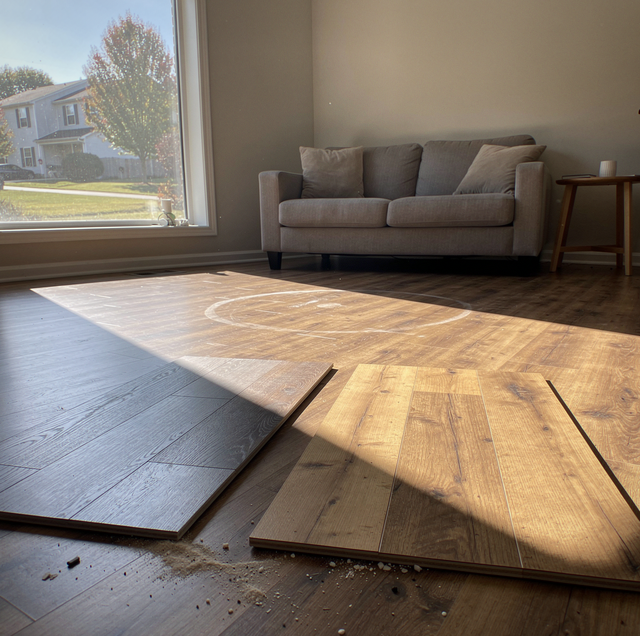
Quick Answer: Hardwood is solid wood that can be sanded and refinished for generations, but it dents, scratches, and swells when it gets wet. Laminate is a printed wear layer over a wood-fiber core that resists scratches and fades far better, but once water gets under the seams, the core can swell and the damaged boards usually have to be replaced, not repaired. Choose hardwood for long-term value and rooms that stay dry; choose laminate for busy households, pets, and a lower-maintenance surface.
You're crouched in the flooring aisle holding two sample boards, and from three feet away they look almost the same. One is a plank sawn from an actual tree and finished with a topcoat. The other is a photograph of wood pressed under a clear wear layer, glued to a fiber core. Once you set them on the floor of a house full of kids, dogs, humid summers, and the occasional dropped glass of water, the two boards stop behaving alike at all. Choosing between them comes down to how your home is actually used, not which one looks better under a showroom light.
What Each Material Actually Is
Solid hardwood flooring is exactly what it sounds like: planks milled from a single piece of wood, usually oak, maple, hickory, or walnut, finished with stain and a protective coat. Because it's solid wood all the way through, it can be sanded down and refinished multiple times over its life, which is what gives hardwood its long-term reputation. Engineered hardwood is a close cousin, a thinner layer of real wood bonded over a plywood core, more stable in temperature and humidity swings but with fewer refinishing cycles available before you sand through the top layer.
Laminate flooring isn't wood at all in the visible sense. It's a high-resolution photograph of wood grain, bonded under a clear melamine wear layer, sitting on top of a compressed wood-fiber core, usually installed as a floating floor with a click-lock edge rather than glued or nailed down. That wear layer is what makes laminate so resistant to scuffs and fading, and it's also the reason laminate can't be sanded and refinished the way solid wood can. When the surface finally wears through, or a board gets damaged, you replace that plank instead of restoring it.
The Head-to-Head
Here's how the two hold up against the factors that matter most once the floor is actually in use.
| Factor | Hardwood | Laminate |
|---|---|---|
| Durability | Dents and scratches from furniture, heels, and pet claws; surface can be repaired by sanding | Wear layer resists scratches and fading well; core can chip at edges if impacted hard |
| Moisture resistance | Swells, cups, and warps if water sits on it; not recommended for wet-prone rooms | Water-resistant top layer, but standing water can seep into seams and swell the fiber core |
| Installation | Nailed or glued to subfloor, needs acclimation time, more labor and skill involved | Floating click-lock planks over underlayment, faster install, fewer specialty tools |
| Refinishing and lifespan | Can be sanded and refinished several times; solid hardwood can last many decades | Cannot be refinished; surface is replaced plank by plank when damaged or worn |
| Best-fit rooms | Living rooms, dining rooms, bedrooms, hallways, low-moisture main living spaces | Basements, playrooms, home offices, rentals, and rooms with kids or pets |
Where Hardwood Pulls Ahead
The biggest advantage hardwood holds is what happens years down the road. Because the plank is solid wood, a scratched or dulled surface can be sanded back to bare wood and refinished, often more than once, which resets the look of the entire floor without tearing it out. That's the reason older homes with original hardwood are often worth restoring rather than replacing: the material has more life left in it than the surface finish suggests.
Hardwood also tends to read as the higher-value floor to buyers and appraisers, and it withstands decades of foot traffic when it's maintained with the right cleaning products and periodic refinishing. The tradeoff is that it's quite sensitive to water. A slow leak under a refrigerator, a humid crawlspace, or a plumbing failure near the floor can cause boards to cup, crown, or gap, and once wood has absorbed enough moisture, drying it out doesn't always undo the damage. That's why hardwood generally isn't installed in bathrooms, laundry rooms, or below-grade spaces prone to dampness.
Where Laminate Pulls Ahead
Laminate's strength is day-to-day toughness against the things that actually wear a floor down. The melamine wear layer resists scratches from claws and toys far better than a wood finish does, and it doesn't fade the way stained wood can when sunlight hits it through a window for years. For a household with pets, kids, or heavy foot traffic, that surface resilience is the main reason laminate gets chosen over solid wood.
Installation is the other place laminate wins. Because most laminate floats over an underlayment with click-lock edges rather than being nailed or glued down, it goes in faster and with less specialized labor, which also makes it a practical choice over an existing subfloor that isn't perfectly suited to a nailed installation. Its weak point mirrors hardwood's, just in a different way: laminate holds up to a spill if it's wiped up quickly, but if water sits on it, especially at the seams between planks, moisture can seep into the wood-fiber core and cause swelling that isn't fixable with sanding or refinishing. A damaged plank gets replaced, not restored, so laminate isn't the right call for a room where a slow leak could go unnoticed.
Matching the Floor to the Room
Think about what happens on that floor on an ordinary Tuesday, not just what it looks like on move-in day. A formal dining room, a main living area, or a bedroom that stays dry and sees moderate traffic is where hardwood's refinishability pays off over the long run, especially in an older home where matching the original wood elsewhere is part of the goal. A finished basement, a mudroom, a playroom, or a rental unit where durability and lower upkeep matter more than resale prestige tends to favor laminate, particularly in spaces where humidity swings between seasons or where spills are more likely.
Older housing stock adds another wrinkle worth thinking through before you commit either way. A home with an uneven original subfloor, aluminum wiring, or plaster walls from a different era often has quirks that affect how any new flooring sits and performs, and a professional look at the subfloor and moisture conditions before installation catches problems a sample board in a showroom never will. Seasonal humidity and temperature swings also matter for either material: wood, whether solid or engineered, needs time to acclimate to a room's humidity before installation, and laminate's floating design gives it a bit more forgiveness for those swings, though it still needs expansion gaps at the walls to avoid buckling.
So Which Should You Choose?
If you want a floor that can be refinished and stretched across decades, and the room stays reasonably dry, hardwood earns its reputation as the long-haul investment. If you're outfitting a busy household, a basement, or a space where moisture and daily wear are bigger concerns than resale prestige, laminate's tougher surface and easier installation make it the more practical pick. Neither one is universally "better." The right answer is whichever material matches the moisture level, traffic pattern, and long-term plans for that specific room, and a proper subfloor check before installation protects either choice from an early failure.
Frequently Asked Questions
It depends on the type of wear. Laminate's melamine surface resists scratches, dents, and fading better than a wood finish does, which is why it holds up well under pets and kids. Hardwood can scratch and dent more easily, but because it's solid wood, it can be sanded and refinished to erase that damage, something laminate's surface cannot do.
Neither is a great match for a consistently wet room like a bathroom shower area. Hardwood swells and warps when it absorbs moisture, and laminate's wood-fiber core can swell if water sits at the seams. Laminate tolerates a quickly wiped-up spill better than hardwood does, but standing water is a problem for both.
Laminate is generally the faster, less specialized installation because most products float over an underlayment with click-lock edges rather than being nailed or glued to the subfloor. Solid hardwood typically requires more acclimation time, more tools, and more labor to fasten down correctly, which is part of why installation timelines differ between the two.
No. A laminate's wear layer is a printed image beneath a protective coating, not solid wood, so it cannot be sanded down and refinished. When a laminate plank wears through or gets damaged, the fix is replacing that individual board. Solid hardwood can be sanded and refinished multiple times over its life, which is one of its biggest long-term advantages.
Laminate's wear layer generally resists claw marks and scuffs better than a hardwood finish, making it a common pick for pet owners. Hardwood can still work well with pets if nails are kept trimmed and rugs protect high-traffic paths, and any scratches that do happen can eventually be sanded out during a refinish.
Both benefit from stable indoor humidity. Solid hardwood needs time to acclimate to a room before installation and can react to seasonal humidity swings with slight expansion or contraction. Laminate's floating design and expansion gaps at the walls give it a bit more tolerance for those swings, but standing moisture or high humidity for extended periods can still affect its core over time.
The Floor That Matches Your Life
Hardwood and laminate solve different problems for different homes, and the honest answer is that both are good floors when they're matched to the right room. Hardwood rewards you for decades if you keep it dry and refinish it when it needs it. Laminate offers a tougher, lower-maintenance surface that shrugs off daily life but can't be restored the way wood can. Walk through how each room in your home actually gets used, and let that answer, not the showroom lighting, make the call.
Weighing hardwood against laminate for your next flooring project? — Get a professional look at your subfloor, moisture conditions, and room-by-room needs before you commit to either material. Eagle Home Renovation Inc. serves Richmond and surrounding areas. License #2705181053. Call (804) 538-3334.
