
Composite vs. Wood Decking: Which Truly Lasts Longer?
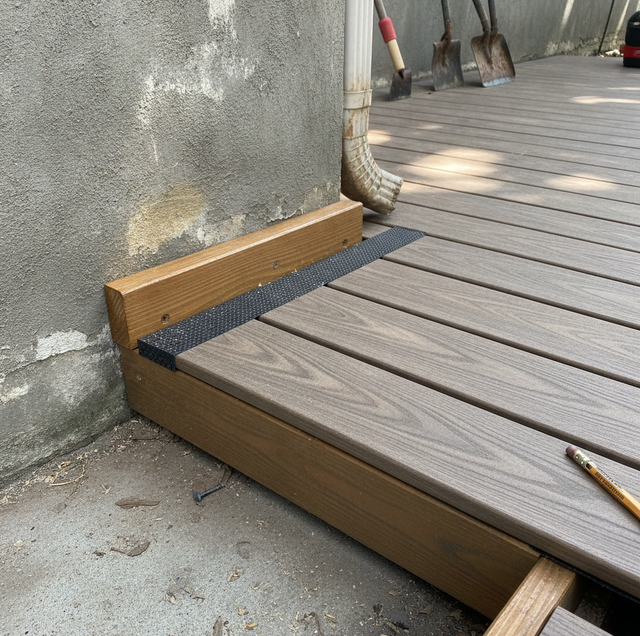
Quick Answer: Capped composite decking typically outlasts wood and needs far less upkeep, often lasting around 25 to 30 years versus roughly 10 to 15 years for a maintained wood deck. Wood looks and feels more natural and stays cooler in direct sun, but it has to be sealed or stained on a regular cycle or it will grey, check, and eventually rot. Composite costs more up front and can get hot underfoot, yet it will not rot or splinter. Whichever surface you pick, the wood frame underneath still needs proper flashing and drainage, because that is where a deck usually fails first.
The decking boards are the part you see and touch, so that is where most people focus. But the choice between composite and wood is really a choice about how you want to spend the next two decades: sanding and staining every year or two, or washing the boards once a season and leaving them alone. Both can give you a solid, good-looking deck. They just age in completely different ways, and understanding why one lasts longer than the other comes down to how each material handles water and sun.
Why Wood And Composite Age Differently
Wood is a natural, porous material. It drinks water and dries out in cycles, and each cycle moves the board a little. Sun does its own damage: ultraviolet light breaks down lignin, the glue that holds wood fibers together, which is why an unsealed board turns silver-grey and starts to feel fuzzy. Left unprotected, that combination leads to checking (fine surface cracks that run with the grain), cupping, splintering, and, eventually, rot where moisture stays trapped.
Pressure-treated pine, the most common decking wood, is infused with preservatives that resist rot and insect damage. That chemistry buys real durability, but it does nothing to stop the board from absorbing water, swelling, shrinking, and greying. Cedar is naturally rot-resistant and dimensionally stable, though it’s softer and more prone to denting. A dense tropical hardwood like ipe is far more resistant to both rot and wear, but it is heavy, hard to fasten, and still wants an oil finish if you care about keeping its color. All three are wood, so all three move with moisture and fade in the sun.
Composite is built to sidestep both problems. Wood-plastic composite (WPC) blends recycled wood fiber with plastic, and most modern boards are "capped," meaning a hard polymer shell is bonded around the core. That cap is the part that matters. It seals the wood fiber away from water and UV, so the board does not soak up moisture, does not feed rot, and holds its color far longer. PVC boards go a step further by containing no wood fiber at all, which makes them the most moisture-proof and lightest option. The tradeoff is that composite is a manufactured surface, so it looks slightly less natural than real grain and it absorbs solar heat, especially in darker colors.
There is one honest caveat worth stating plainly. Early-generation composites from the 2000s were often uncapped, and many of them developed surface mold and faded badly, which is where composites got their mixed reputation. Capped boards were designed specifically to fix that, and they perform much better, though how well any given line resists fading and staining depends on the manufacturer.
Composite vs Wood At A Glance
| Factor | Wood (pressure-treated, cedar, hardwood) | Capped composite / PVC |
|---|---|---|
| Typical lifespan | ~10 to 15+ years with regular upkeep | ~25 to 30 years (varies by line) |
| Upkeep | Seal or stain on a cycle, plus cleaning | Wash with soap and water; no sealing |
| Rot and moisture | Absorbs water; can rot if it stays wet | Cap blocks water; will not rot |
| Heat underfoot | Cooler in direct sun | Hotter, especially dark colors |
| Look and feel | Natural grain, warm underfoot | Uniform, slightly less natural |
| Scratch and dent | Dents but can be sanded and refinished | Scratches show; usually not sandable |
Treat the lifespan and upkeep figures as ranges, not guarantees. A pressure-treated deck that gets sealed on schedule and drains well can push past fifteen years, while one that never gets maintained can start failing in under ten. Composite lifespan depends on the specific product and how the deck was built.
Maintenance: The Real Difference Over Time
This is where the two materials separate the most. A wood deck needs a protective finish, and that finish wears off. Depending on sun exposure and the product used, this usually means cleaning and reapplying a stain or sealer every 1 to 3 years. Skip it, and water starts winning: the surface greys, fibers lift into splinters, and fasteners work loose as the boards cycle. Wood also gives you a repair path that composite does not, because a dented or weathered board can be sanded and refinished, and a single bad board is cheap to swap.
Composite asks for almost nothing by comparison. The routine is to wash the boards a couple of times a year with soap, water, and a soft brush to remove pollen, leaf tannin, and grime before they set into stains. There is no sealing, no staining, no sanding. The catch is that a deep scratch or a burn mark in composite is essentially permanent, since you cannot sand the cap without exposing the core, so damaged boards get replaced rather than refinished.
Think of it like the difference between a leather boot and a rubber one. The leather boot looks better and can be conditioned and resoled for years, but only if you keep oiling it; neglect it, and it cracks. The rubber boot never needs conditioning and shrugs off water, but once you gouge it, that gouge is there for good.
Moisture, Rot, And The Frame Underneath
In a humid climate, moisture is the deciding factor for the deck surface, and composite has the clear edge. Its cap does not absorb water, so it does not host the rot and mildew that plague neglected wood. That resistance is exactly why many homeowners in wet regions lean toward composite for the walking surface.
But here is the part that gets missed, and it matters more than the board choice: the structure holding your deck up is almost always pressure-treated wood, no matter what you walk on. The joists, beams, posts, and the ledger board bolted to your house are lumber. Composite decking does nothing to protect that framing. If water gets behind the ledger because the flashing is missing or installed incorrectly, the rim of the house and the ledger can rot out of sight, and that is the failure that drops decks. Proper ledger flashing, gaps between boards for drainage, and joist protection tape on the top of the framing are what keep the structure sound. A composite surface over a rotting frame is still a dangerous deck.
Heat, Look, And Feel
Composite absorbs solar heat and can get noticeably hot underfoot in direct summer sun, and darker colors get the hottest. If your deck faces open south or west sun with no shade, and people will be walking barefoot, that is a real consideration. Lighter composite colors run cooler, and shade structures or an orientation that catches afternoon shadow help a lot. Wood generally stays cooler in the same sun, which is a genuine point in its favor for a fully exposed deck.
On looks, this is personal. Wood has real grain, warmth, and a smell that composite cannot fully copy, and for a traditional or historic home, that natural surface often just fits. Composite has gotten far better at mimicking grain and multi-tone color, and it holds that appearance for decades without greying, but up close, it still reads as manufactured to most eyes.
How To Choose Between Them
Start with your upkeep appetite. If you honestly will not sand and re-stain a deck every couple of years, wood will not stay good-looking, and composite removes that entire chore. If you enjoy the maintenance or want the lowest entry point and the most natural surface, wood makes sense. Next, weigh sun exposure: a shaded deck erases most of the composite's heat downside, while a wide-open one favors either lighter composite or cooler wood. Then factor in how long you plan to stay, since composite's longer lifespan pays off most over many years in one home. Finally, no matter which surface wins, spend on framing, flashing, and drainage, because that is what determines whether the deck will be safe in fifteen years.
Frequently Asked Questions
The boards themselves will not rot because the polymer cap seals the wood fiber away from water, and all-PVC boards have no wood fiber to rot. What can still rot is the framing underneath, which is pressure-treated lumber. The ledger board where the deck attaches to the house is the highest-risk spot, since a bad flashing detail lets water sit against the house rim. Composite protects the surface, not the structure.
In direct, unshaded summer sun, a dark composite board can get hot enough to be uncomfortable on bare feet, noticeably warmer than wood in the same spot. Heat tracks with color, so lighter grey and tan boards absorb less and stay cooler than deep brown or black. Shade from a pergola, an awning, or nearby trees makes a large difference, and so does an orientation that falls into afternoon shadow.
Yes, and this is the key upgrade. Early composites from the 2000s were often uncapped, so their exposed wood fiber could grow surface mold and fade unevenly, which earned the material a bad reputation. Capped boards wrap the core in a protective polymer shell that resists staining and holds color far better. How much fade resistance you get still varies by manufacturer, so it is worth comparing specific product lines rather than assuming all composites are equal.
Sometimes, but only if the framing is truly sound. Because composite lasts so long, you do not want to lay a 25-year surface over joists or a ledger with a decade left in them. Before re-decking, the frame gets inspected for rot, loose or corroded fasteners, proper joist spacing, and correct ledger flashing. Composite can also be slightly heavier than wood and may require tighter joist spacing for support, so the existing frame must be checked against the board's requirements rather than assumed to be fine.
Wood needs periodic cleaning plus a fresh coat of stain or sealer, typically somewhere in a one-to-three-year cycle depending on sun exposure and the product, and it may need occasional sanding, board swaps, and fastener tightening. Composite needs washing with soap, water, and a soft brush a couple of times a year to remove pollen, leaf tannin, and grime before they stain; that is essentially the whole list. No sealing, no staining, no sanding.
For the walking surface, composite handles both better, since its cap does not absorb the moisture that drives rot in humid stretches, and it does not soak up water that then expands during a freeze. Wood swells when it is wet, shrinks as it dries, and any water trapped in a check can freeze and widen the crack with repeated cold snaps, which is why sealing matters so much on real wood. For the frame, both materials use the same pressure-treated lumber, so good drainage, flashing, and airflow underneath protect the structure regardless of what you walk on.
Book a free deck consultation and get a straight answer on composite versus wood for your yard — a longer-lasting deck starts with a sound frame and the right surface. Eagle Home Renovation Inc. serves Richmond and surrounding areas. License #2705181053. Call (804) 538-3334.
