
Hardwood vs Painted Cabinets: Which Is Right for You?
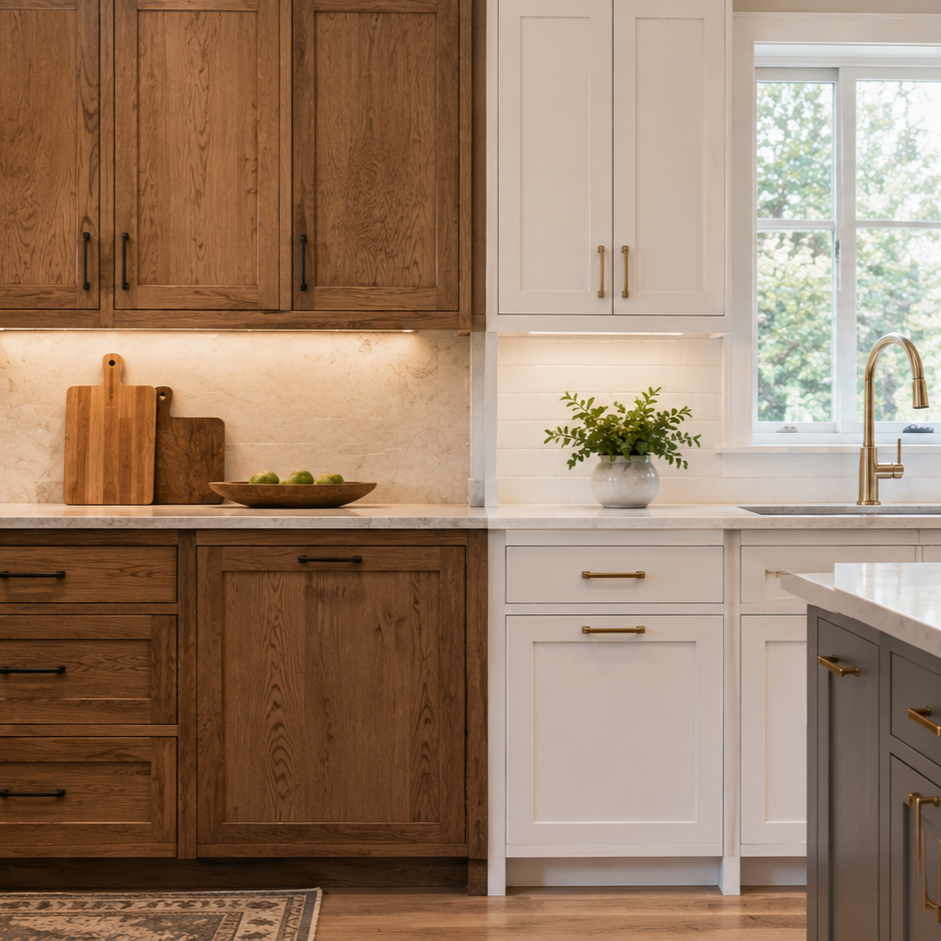
Quick Answer: The choice between stained hardwood and painted cabinets comes down to look, durability, and how repairs age. Stained hardwood shows off natural grain, hides minor wear well, and is easy to touch up, but it offers fewer color options and the wood's tone can shift over time. Painted cabinets give a smooth, uniform, any-color finish that suits modern and classic kitchens alike, but they show chips and dings more, and repairs can be harder to blend, especially on lighter colors. Both can be excellent on quality cabinet boxes — the right pick depends on your style, your household, and how you want them to wear.
Once you've decided to update your kitchen cabinets, the next big fork in the road is finish: the warmth of stained hardwood or the clean, color-rich look of paint. Both can look fantastic, and both have real trade-offs that show up over years of daily use. Knowing how each behaves helps you choose the one you'll be happy with long after the project is done.
What "Hardwood" and "Painted" Really Mean Here
A quick clarification, because the comparison is often phrased loosely. Both stained and painted cabinets are typically built on wood or wood-product boxes; the difference is the finish on the doors and faces. "Hardwood" cabinets usually mean solid wood doors finished with a stain and clear topcoat that let the natural grain show. "Painted" cabinets have an opaque painted finish that covers the grain, often applied over a smooth wood or MDF door designed to take paint evenly. So the real question is stained-and-natural versus painted-and-opaque.
The Look
This is the most personal factor. Stained hardwood showcases the natural grain, color variation, and character of real wood, giving a warm, traditional, or rustic feel depending on the species and stain. No two doors are exactly alike, which many people love.
Painted cabinets deliver a smooth, uniform finish in virtually any color, from crisp white to deep navy to soft gray. They read cleaner and more contemporary, though painted Shaker styles are also a longtime classic. Paint also lets you make a bold design statement or match a specific palette in a way stain can't.
Durability and How They Wear
Both hold up well on quality construction, but they wear differently — and how they wear matters as much as how tough they are.
Stained hardwood tends to hide minor wear gracefully. Small scratches, dings, and the general patina of use blend into the grain and varied tone, so a busy kitchen doesn't show every bump. The natural look is forgiving.
Painted cabinets have a hard, smooth finish that's easy to wipe clean, but that uniform surface also shows damage more readily. A chip or a ding interrupts the solid color and stands out, and edges and corners that get bumped often are the first to reveal it. Lighter paints hide less; darker paints can show dust and fingerprints.
| Factor | Stained Hardwood | Painted |
|---|---|---|
| Look | Natural grain, warm, traditional | Smooth, uniform, any color |
| Color options | Limited to wood/stain tones | Virtually unlimited |
| Hides daily wear | Yes — blends into grain | Less — chips show on solid color |
| Ease of repair | Easier to touch up and blend | Harder to blend, especially light colors |
| Cleaning | Easy, grain hides smudges | Easy, but shows fingerprints |
| Aging | Tone may shift over years | Can chip or hairline-crack at joints |
Repairs: The Long-Term Difference
Years down the road, a finish's repairability matters. Stained hardwood is generally easier to touch up — a scratch can often be addressed with matching stain and blended into the grain so it nearly disappears. Painted finishes are trickier. Matching paint exactly after it has aged is hard, and a touch-up can leave a slightly different sheen or shade that's visible against the uniform surface. On painted cabinets, this is why care during daily use pays off.
There's also movement to consider. Solid wood expands and contracts with humidity, and on painted cabinets, that movement can sometimes cause fine hairline cracks at the joints over time. It's a cosmetic issue rather than a structural one, but it's part of how painted finishes age.
Think about your household, not just the showroom look. A busy kitchen with kids and heavy daily use leans toward stained hardwood, which forgives bumps and is easy to touch up. A lower-traffic kitchen where a clean, specific color is the priority is a great fit for paint.
How to Decide
Start with the look you want, since that's the hardest thing to compromise on — if your heart is set on a deep painted color or the warmth of natural oak, that narrows it quickly. Then weigh it against how the kitchen gets used. If you want a finish that shrugs off daily wear and is simple to repair, stained hardwood has the edge. If you want a specific color and a smooth, contemporary look, and you'll be mindful of chips, paint is a strong choice. Either way, the quality of the cabinet boxes and doors underneath matters more than the finish for how long the cabinets actually last, so don't let the finish debate distract from solid construction. Sturdy boxes, solid doors, and quality hinges and drawer slides are what you'll notice every day for years, long after the finish decision fades into the background.
Frequently Asked Questions
Both can be very durable in quality construction, but they wear differently. Stained hardwood hides minor scratches and dings in its grain, while painted cabinets have a tough, wipeable surface that nonetheless shows chips more clearly against the solid color. Painted edges and corners are the most likely spots to reveal wear over time.
Stained hardwood is generally easier to touch up because a matching stain can be blended into the grain, so a scratch nearly disappears. Painted finishes are harder to repair invisibly, because matching aged paint exactly is difficult, and a touch-up can differ slightly in shade or sheen from the uniform surface.
They can show chips more than stained cabinets because any damage interrupts the solid color and stands out. High-quality paint and finishing reduce it, but corners and edges that get bumped are still the most vulnerable. With mindful daily use, painted cabinets hold up well; they just reveal damage more readily than grain-hiding stain.
It can. Natural wood tones can shift gradually with age and light exposure, sometimes warming or deepening over the years. Many people find this adds character, but it's worth knowing if you want a color that stays exactly the same. Painted finishes keep their color but age in other ways, like potential hairline cracks at joints.
No. Painted cabinets, especially in classic Shaker styles, have been popular for a long time and suit both modern and traditional kitchens. Stained wood is equally timeless in its own way. Style preferences cycle, but both finishes are well-established choices rather than trends, so either can look current and lasting.
Less than the construction underneath. A quality cabinet box and well-built doors matter more for longevity than the choice between paint and stain. Both finishes can last many years when applied well. Choose the finish for look and how it wears, but make sure the cabinets themselves are solidly built first.
Choose for Your Style and Your Life
Stained hardwood and painted cabinets can both make a beautiful kitchen — the difference is in the details of how they look, wear, and repair. Hardwood brings natural warmth, hides daily use, and touches up easily; paint offers any color and a smooth, contemporary finish at the cost of showing chips more. Match the finish to your taste and how hard your kitchen works, and build it on quality boxes either way.
Deciding between painted and stained cabinets? — Get help weighing the look, wear, and upkeep for the way your kitchen is used. Eagle Home Renovation Inc. serves Richmond and surrounding areas. License #2705181053. Call (804) 538-3334.
