
How Long Does a Full Kitchen Remodel Take? A Real Timeline
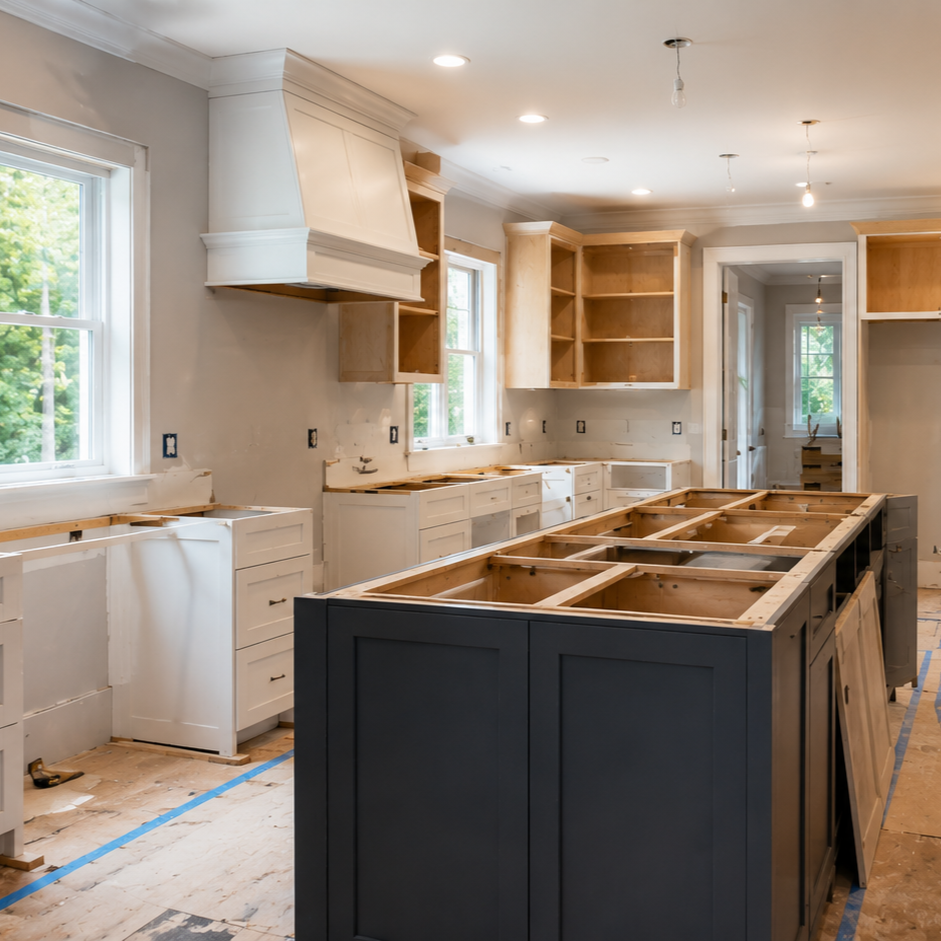
Quick Answer: A full kitchen remodel usually takes somewhere around 6 to 12 weeks of active work, though the planning that comes before it can add weeks or months. The construction itself moves through predictable phases: demolition, rough-in for plumbing and electrical, inspections, cabinets, countertops, then finishes. The countertop step often creates a built-in pause, since most stone tops are templated only after cabinets are installed and then fabricated off-site. Delays come from custom orders, inspections, hidden damage found during demolition, and change orders. Knowing the phases helps you set realistic expectations and plan for the weeks your kitchen is out of service.
A kitchen remodel is one of the most disruptive home projects there is, because it takes out the room your household runs on. So the first question almost everyone asks is how long they'll be living without it. The honest answer is a range — but the range becomes much more useful once you understand the phases the work moves through and what tends to stretch the timeline.
Planning Comes First — and It Takes Real Time
Before any demolition begins, there's a design and planning stage that people often forget to count. This is where the layout is finalized, materials and finishes are selected, and the cabinets and countertops are ordered. Because cabinets, in particular, can take weeks to arrive, smart planning means ordering well in advance and not starting demolition until the long-lead items are in hand. Rushing this stage is one of the most common reasons a project stalls midway, with a torn-out kitchen waiting on a back-ordered cabinet.
The Construction Phases
Once work starts, a full remodel generally follows a set sequence. Each phase depends on the one before it, which is why the order rarely changes.
| Phase | What happens | Rough duration |
|---|---|---|
| Demolition | Old cabinets, counters, flooring removed | A few days |
| Rough-in | Plumbing, electrical, any framing changes | About a week |
| Inspection | Rough work checked before closing walls | Scheduling-dependent |
| Drywall & paint | Walls closed, primed, painted | About a week |
| Flooring | New floor installed | A few days |
| Cabinets | Cabinets set and leveled | Several days to a week |
| Countertops | Templated, fabricated, installed | One to three weeks |
| Finishes | Backsplash, fixtures, appliances, hardware | About a week |
Add these up and the active construction commonly lands in the 6-to-12-week window, with simpler updates on the shorter end and full layout changes on the longer one.
The Countertop Pause Most People Don't Expect
One phase deserves special attention because it surprises homeowners: countertops. Most stone and quartz countertops can't be measured until the cabinets are installed, because the template must match the actual cabinet positions exactly. After templating, the slab is fabricated off-site, which typically takes one to a few weeks. That means there's usually a built-in gap between cabinet installation and countertop installation, where the kitchen sits with bare cabinets and no working sink. Planning for that pause keeps it from feeling like a delay.
What Stretches the Timeline
Several things reliably add time, and most can be anticipated. Custom or semi-custom cabinets have long lead times, and a single back-ordered item can delay the entire sequence. Inspections have to be scheduled and passed before work can continue, and that pacing is outside anyone's direct control. Demolition sometimes uncovers hidden problems — water damage, outdated wiring, or plumbing that isn't up to current code — that have to be fixed before the project moves on. And change orders, where you decide to alter something mid-project, ripple through everything that follows.
Decide on every finish and fixture before demolition day — down to the cabinet hardware and faucet. Mid-project decisions and changes are one of the biggest sources of delay, because each one can pause work and push back every step that depends on it.
Why the Sequence Can't Be Rushed
It's tempting to ask why phases can't overlap to save time, and the answer is that each step physically depends on the last. You can't set cabinets until the floor and walls are done; you can't template countertops until cabinets are in; you can't install the backsplash until the countertops are set. Inspections have to happen before walls are closed. Trying to skip or compress steps usually creates rework that costs more time than it saves. A realistic schedule respects the dependencies rather than fighting them. The dependencies are also why a single slip early on echoes through the whole project: a cabinet that arrives a week late doesn't just delay cabinet day, it pushes countertop templating, which pushes the backsplash, which pushes the final fixtures. Building a little slack into the schedule absorbs those ripples instead of letting one hiccup reset everything downstream.
Planning Around the Disruption
Because the kitchen is out of service for weeks, it helps to set up a temporary kitchen elsewhere — a microwave, a coffee maker, and a sink in another room go a long way. Knowing the timeline in advance lets you plan meals, schedule the work for a convenient season, and brace for the countertop gap when there's no sink. A clear schedule from your contractor, with the phases and their dependencies laid out, turns an open-ended disruption into a project with a visible finish line.
Frequently Asked Questions
Active construction usually runs about 6 to 12 weeks, depending on the scope. Simpler updates that keep the existing layout fall on the shorter end, while remodels that move plumbing, change the layout, or use custom cabinets take longer. On top of construction, the design and ordering stage beforehand can add weeks or months that are easy to underestimate.
Most stone and quartz countertops can only be templated after the cabinets are installed, because the measurements must match the real cabinet layout. The slab is then fabricated off-site, which takes one to a few weeks. That creates a built-in gap between the cabinet and countertop installation when the kitchen has cabinets but no working counter or sink.
The biggest culprits are long lead times on custom cabinets, back-ordered materials, inspection scheduling, hidden problems found during demolition, and change orders made mid-project. Most of these can be reduced by finalizing all selections and ordering long-lead items before demolition starts, so the work isn't waiting on decisions or deliveries.
Generally, no, because each phase depends on the one before it. Cabinets need finished floors and walls, countertops need installed cabinets, and backsplashes need to be set. Inspections must pass before walls close. Trying to compress the sequence usually causes rework that costs more time than it saves, so a realistic plan follows the order.
Yes. Cabinets often have the longest lead time of anything in the project, so ordering them early — and waiting until they arrive before starting demolition — prevents the common situation of a torn-out kitchen sitting idle while you wait on a delivery. Long-lead items dictate when work should actually begin.
For much of the active construction, yes, which is why setting up a temporary kitchen elsewhere helps. The sink and appliances are out for a good portion of the project, and there's usually a stretch around the countertop phase with no working sink at all. Planning meals and a small temporary setup makes the weeks far more manageable.
Plan the Time, Not Just the Design
A full kitchen remodel typically means 6 to 12 weeks of active work on top of a planning stage that deserves its own time. The phases move in a fixed order, the countertop step builds in a pause, and delays usually trace back to decisions or deliveries that weren't locked down early. Understanding the timeline up front lets you plan around the disruption instead of being caught off guard by it.
Planning a kitchen remodel and want a realistic schedule? — Get a clear phase-by-phase timeline built around your kitchen and your selections. Eagle Home Renovation Inc. serves Richmond and surrounding areas. License #2705181053. Call (804) 538-3334.
