
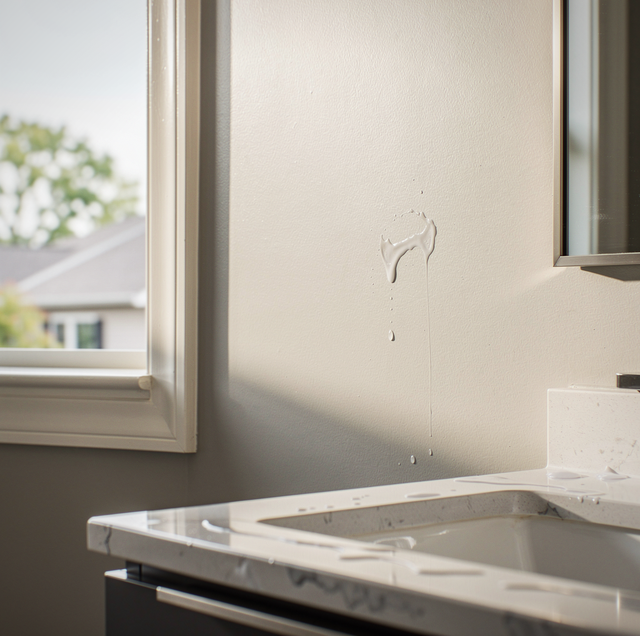
Paint sheen is nothing more than how much light the dried film reflects back into the room. A flat finish scatters that light in every direction, so the eye reads a flat wall as color rather than as surface, and a dent, a seam, or a roller mark gets lost in the scatter. A glossy finish does the opposite: it bounces light back in a tighter, more direct reflection, and the same resin-rich film behind that shine is what makes it harder and easier to wipe. That trade-off, more hiding power at the low end and more durability at the high end, is what decides which sheen belongs on which wall.
| Sheen | How It Reads on the Wall | How It Takes Cleaning | How It Shows Flaws | Fits |
|---|---|---|---|---|
| Flat or matte | Soft, no visible shine, deep color | Wipes lightly; scrubbing can burnish or lift the surface | Hides dents, seams, and roller marks | Ceilings, adult bedrooms, formal rooms |
| Eggshell | A faint sheen, close to flat | Withstands routine wiping with a damp cloth | Hides flaws except under raking light | Living rooms, hallways, bedrooms |
| Satin | A soft, visible glow | Scrubs clean without burnishing | Starts to show ridges and patches | Kitchens, bathrooms, kids' rooms |
| Semi-gloss | A noticeable shine | Stands up to repeated scrubbing and moisture | Shows surface imperfections clearly | Trim, doors, cabinets, bathroom walls |
| Gloss | A hard, reflective shine | Wipes clean easily, resists staining | Shows flaws plainly in the surface underneath | Doors, cabinetry, hard-wear trim |
What Changes in the Paint Film as Sheen Rises
Every paint is pigment and resin suspended in a liquid carrier. As sheen rises across the flat-to-gloss range, the ratio between those two shifts: less pigment, more resin. Pigment particles scatter light in every direction, which is what makes a flat surface look soft and matte. Resin, once it cures, forms a smoother, more continuous film. A higher-sheen paint carries more of that resin film and less of the light-scattering pigment, so it reflects light back toward the angle it arrived from rather than scattering it across the surface. That smoother film is also less porous, and porosity is the mechanism behind both the strength and the one weakness of a high sheen: a tighter film sheds a wiped stain and resists moisture soaking in, but it also has less texture of its own to hide whatever is underneath it. A bump, a sanding mark, or a drywall seam shows through a smooth film in a way it would not through a matte one, since matte scatters that same light instead of reflecting it back.
Ceilings and Low-Traffic Rooms
Ceilings in dry rooms take a flat finish because of how light crosses that surface; fingerprints and scuffs are not the issue overhead. Light from a window or a lamp travels nearly parallel to the ceiling before it strikes it, creating a raking angle that exaggerates any texture in a film with a reflective sheen. A flat finish, because it scatters light rather than bouncing it, hides the waviness that is ordinary in a drywall or plaster ceiling. A formal living room or a room used for sleeping sees little wall contact, so a flat or matte finish there buys the same benefit: a softer look that reads as more depth of color, with little wear for a higher sheen to help against.
Living Rooms, Bedrooms and Hallways
Everyday living spaces sit between the two extremes. Eggshell fits these rooms: it holds a faint sheen, close enough to flat that it still hides surface flaws, while standing up to a damp cloth better than a true flat finish does. A hallway funnels shoulders, bags, and furniture past its walls on every trip through the house, so a hallway carried in eggshell, or bumped up to satin along the stretch where that contact concentrates, buys back some of the durability a flat finish gives up. The decision inside this middle range comes down to how much the wall itself gets touched: a formal living room with light wall contact can stay closer to flat, while a well-traveled hallway does better carrying a bit more sheen.
Kitchens and Bathrooms
Kitchens and bathrooms carry moisture and grease that other rooms do not, and that changes what the wall film has to do. Steam from cooking or a shower condenses on the wall, and a film with more resin and less porosity resists moisture soaking in, whereas a flat film would absorb it and hold on to it. Satin or semi-gloss on these walls also means a splatter near the stove or a fingerprint near a light switch wipes off clean instead of leaving a shadow behind. A wall that stays damp for long stretches can grow mildew on its surface, so a wipeable film that lets a quick clean remove the moisture and residue matters more in a humid room than in a dry room with no steam. A glossier surface also bounces more of the room's light back into it, which is part of why a small, mirror-heavy bathroom leans on shinier tile and fixtures to stretch the space, not the wall paint alone. Fresh paint keeps releasing solvent vapor while it cures, so the room stays ventilated, with a window open or a fan running, until the smell is gone.
Trim, Doors and Other Hard-Wear Surfaces
Trim, doors, and cabinetry take direct contact every day: hands on a doorframe, a chair pushed against the baseboard, a cabinet door closing against its own frame. Semi-gloss or gloss earns its place here because that dense, low-porosity film resists scuffing and wipes clean of the grime that collects at hand height, and the shine also makes trim read as a distinct architectural line against a flatter wall color beside it. Painted cabinets carry this same hard, high-sheen film for the same reason trim does. The same hard film that fights off daily contact also telegraphs an uneven substrate underneath it, so trim carrying a high sheen needs a smoother surface than a wall does before the paint ever goes on.
Why Surface Prep Decides How High a Sheen the Walls Can Carry
A sheen choice is a bet on what light will do to whatever lies beneath the paint. Flat forgives an imperfect wall because it scatters that light before it can catch on a patch or a seam. Move up to satin or semi-gloss, and that forgiveness disappears: light striking the wall at an angle catches a raised edge, so a drywall seam that was invisible under flat paint becomes a visible ridge once the sheen goes up. A patch sanded flush but not feathered wide enough shows the same way, as a faint raised or sunken shadow line once the wall reflects light instead of scattering it. That is why the sheen decision and the prep decision are one and the same decision: a wall headed for a higher sheen needs its patches feathered wider and sanded smoother than the same wall would need under flat paint.
Sanding or scraping paint on an older home can release lead dust from layers beneath newer coats, posing a hazard to anyone who breathes it. A licensed contractor tests those layers and contains the room before any prep work begins.
Older layers of paint under a newer coat are part of that same prep question, since a scraper or a sanding block cuts into whichever layer it reaches. Even a light scuff-sand for adhesion disturbs the older layers it touches, so on an older home the test comes before any sanding, heavy or light, and the amount of prep is set before the sheen is finalized.
Frequently Asked Questions
They can, but only at a real break in the plane, such as an inside corner, a change of material, or trim standing proud of the wall surface. Two sheens meeting across a flat, unbroken run of wall create a visible flash line right where they meet, because each film reflects the same light differently, and no amount of careful cutting-in hides that difference once the room's light hits it.
Sheen names are not standardized across paint lines, so what one brand calls eggshell another may label low-luster or pearl, and the reflectance behind the name can vary between brands even when the label matches. Painted samples of each, held up in the room's light, compare them more reliably than the names on the cans.
Yes. A dark, saturated color applied in a higher sheen reflects the room's own light back out along with its pigment, which can make the color shift in tone from one side of the room to the other as the light angle changes. A deep color chosen for its depth of tone is better served by a flatter finish, since a flat film scatters light evenly rather than reflecting a bright patch back at the viewer.
Crown molding can be treated as trim, in the casings' semi-gloss, to read as its own line; painted to match the ceiling or the wall instead, it blends into that surface.
Going from an existing glossy finish to a new flat or eggshell coat needs a bonding primer, or a scuff-sand once any older layers have been tested for lead, because the new paint's resin has little porous surface to grip on a slick existing film and can peel away in sheets without that step. Going from an existing flat finish to a higher sheen needs no special primer for adhesion, since the porous existing film already gives the new coat something to bite into; a stain or a strong color change is a separate reason to prime.
A bathroom ceiling over a shower or tub takes on the same steam a bathroom wall does, so it can be painted in eggshell or satin instead of the flat finish a dry room's ceiling gets, trading some of flat's forgiveness for a film that resists the moisture collecting overhead.
Line up interior painting — sheen chosen room by room, from ceilings to trim, with the prep each sheen needs. Eagle Home Renovation Inc. serves Richmond and surrounding areas. License #2705181053. Call (804) 538-3334.