
How to Choose Bathroom Tile for Wet Areas Without a Slip Risk
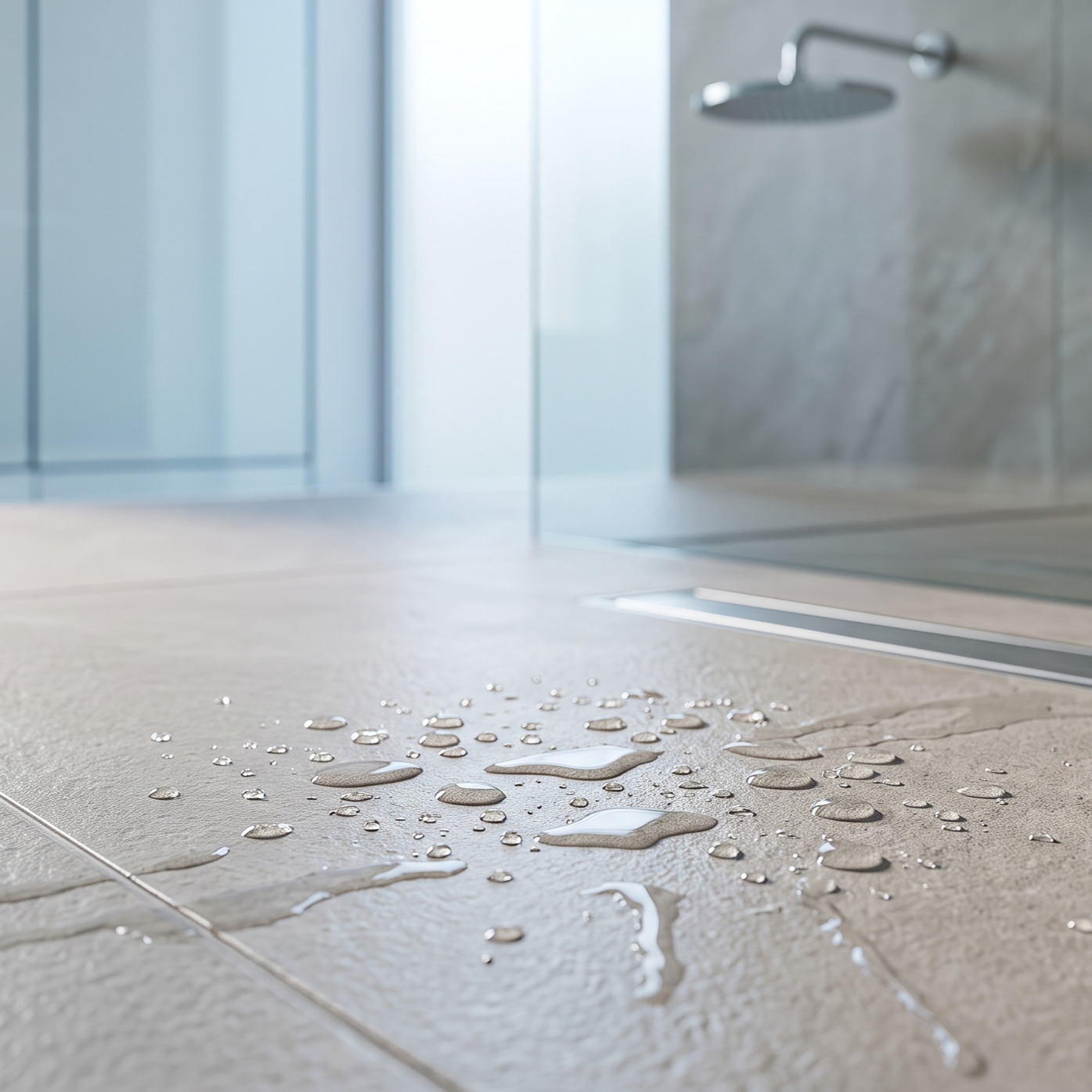
Standing water is the quiet test every bathroom tile has to pass. A tile that looks perfect in a showroom can turn slick the moment your bare feet hit it when it's wet, or slowly wick moisture into the wall behind it until the framing starts to rot. Choosing tile for a shower or a wet bathroom floor is less about the color and more about how the material behaves when it stays wet for hours at a time.
The good news is that the decision follows a handful of physical properties. Once you understand what those properties do, picking the right tile for a wet area stops being guesswork and starts being a checklist.
Quick Answer: For a shower or wet bathroom floor, choose porcelain for its very low water absorption, pick a textured or matte finish (or small mosaics) so the surface stays grippy when wet, and make sure a waterproof membrane and a water-resistant grout sit behind and between the tiles. Save porous natural stone for spots you are willing to seal and maintain.
Why Water Changes Everything About Tile Choice
Set a sponge next to a river stone, and you have the whole range in front of you. Drop water on the river stone, and it beads and runs off; the stone barely takes any in. Drop it on the sponge, and it soaks straight through. Every tile material falls somewhere between those two, and where it falls determines whether it belongs in a constantly wet area.
That property is called porosity, usually described as water absorption. The lower the absorption, the less water the tile pulls into its body, and the better it shrugs off the constant soaking a shower delivers. This single factor separates the materials that thrive underfoot in a wet bath from the ones that struggle there.
Porosity: The First Filter for Any Wet-Area Tile
Porosity is where the choice begins, and the three common materials behave very differently.
Porcelain absorbs almost no water. It is fired hotter and denser than standard tile, which gives it a tight, closed body that liquid cannot easily penetrate. That density is exactly why it is the standard pick for shower floors and wet walls: even under hours of running water, it stays dimensionally stable and does not draw moisture into itself.
Ceramic sits a step up in absorption. A glazed ceramic tile is perfectly at home on a drier bathroom wall, where the glaze sheds splashes, and the tile rarely faces standing water. Push that same ceramic onto a shower floor, and its more porous body becomes a liability, taking on moisture in a way porcelain does not.
Natural stone, like marble or travertine, is the most porous of the group. Stone is a beautiful surface, but it drinks water and stains through its open pores unless it is protected. That does not rule stone out of a bathroom, but it does mean stone comes with a maintenance commitment that the harder-fired materials skip.
Slip Resistance: The Finish Matters as Much as the Material
The second filter is traction, because a wet-area tile that you slip on has failed at its most basic job. Two factors determine how grippy a floor remains when it is wet: the surface finish and the tile size.
Finish comes first. A textured or matte surface gives the sole of your foot something to catch, while a high-gloss polished surface turns into a skating rink under a film of water. Tile is often rated for slip resistance, and for a floor, you want a finish and rating built to hold traction, wet, not just dry.
Size matters too, and this is where small tiles earn their place. A floor covered in mosaics has grout lines every inch or two, and each of those slightly recessed lines breaks up the smooth surface and gives your foot extra grip. A single large polished tile, by contrast, offers one continuous slick plane with nothing to interrupt a slide. The same logic that makes a big tile appealing on a wall works against it on a wet floor.
The Waterproofing Behind the Tile
Here is the part that surprises many homeowners: the tile you see is not what keeps water out of your wall. The tile and the joints between them are the wear surface, but the real barrier lives behind them.
A properly built wet area has a waterproof membrane behind the tile and around the shower pan. That membrane is the layer that actually stops water from reaching the framing and subfloor. The tile takes the daily abuse, sheds most of the water, and the membrane catches whatever works past the surface. Skip that layer, and you can have flawless-looking tile sitting over slowly rotting wood.
This is why the phrase to remember is that a tile installation is only as good as the waterproofing and grout behind and between it. The prettiest porcelain in the world cannot save a shower that was never waterproofed underneath.
Grout and Joints: The Weakest Link If You Ignore Them
Grout fills the lines between tiles, and in a wet area, those lines are where trouble likes to start. Grout is not a decorative afterthought; it is part of the water-management system, and the wrong grout undoes good tile.
Cement-based grouts vary in how resistant they are to water, and many benefit from sealing to prevent moisture and mildew from settling in. Epoxy grouts take a different approach, resisting water and staining without the same sealing routine. The joint width and how well the grout is packed also affect how the surface holds up over years of daily soaking. Get the grout right and the whole assembly stays tight; get it wrong, and water finds the gaps.
Tile Size and Placement: Matching the Tile to the Job
Size is not a one-answer question because walls and floors require opposite things.
On shower and bathroom walls, large-format tile shines. Bigger tiles mean fewer grout lines, which means less grout to seal and less grout to scrub, and walls do not need the underfoot traction that floors do. The result is a cleaner surface with fewer maintenance seams.
On a shower floor, the logic flips to small mosaics. A shower floor is not flat; it slopes toward the drain, and small tiles flex across that slope far better than a big, rigid tile that would fight the pitch. Those same mosaics deliver the dense pattern of grout lines your feet need for grip. Big tiles up high, small tiles down low is the pattern that keeps showing up in well-built showers for exactly these reasons.
Putting It Together: A Simple Decision Path
Once the properties are clear, the decision falls into place. Reach for porcelain on wet floors and shower surfaces because its very low water absorption suits constant moisture. Choose a textured or matte finish, or small tiles, anywhere your bare feet will land wet. Reserve porous natural stone for areas you are truly willing to seal and maintain over the years. And behind all of it, insist on a waterproof substrate and a water-resistant grout, because those hidden layers decide whether the shower lasts.
None of this means you have to sacrifice the look you want. Porcelain comes in finishes that read like stone, mosaics come in nearly any color, and large-format wall tile can carry the design while small floor tile handles the wet work. The materials give you room to build a bathroom that is both handsome and honest about the water it has to live with.
Frequently Asked Questions
Porcelain is the better choice for a shower floor and wet walls, and there is a precise spec behind that. Under ASTM standards, a tile only qualifies as porcelain if its water absorption is 0.5 percent or lower, which is exactly the tight, closed body that shrugs off constant soaking. Ceramic sits well above that threshold, so it belongs on drier bathroom walls rather than in the wettest zones.
Porcelain and glazed ceramic do not need sealing because their surfaces already resist water. Natural stone, such as marble or travertine, is porous and has to be sealed periodically to resist water and staining. Regardless of which tile you pick, the grout is often sealed as well to keep moisture and mildew out of the joints.
Choose a textured or matte finish and check the slip number rather than eyeballing it. Under ANSI A137.1, a wet-area floor tile should carry a DCOF (its wet slip-resistance rating) of at least 0.42; below that, the surface is not rated to hold traction wet. Small tiles or mosaics help further, since the extra grout lines add grip, while a large polished tile gets slick the moment a film of water sits on it.
Tile and grout are not fully waterproof on their own, so the real barrier is a dedicated membrane behind the surface. In practice, that is either a sheet membrane or a liquid-applied membrane bonded over the substrate, plus a sloped pre-slope and a pan liner built into the shower base so that any water that gets through drains out rather than pooling. That hidden layer is why a shower can rot the framing behind it, even when the surface tile still looks sound.
Large-format tile suits the walls, since fewer grout lines mean less to seal and clean over time. A shower floor is the exception and typically uses mosaics 2 inches or smaller, because a tile that small can conform to the pitch of the slope toward the drain without lippage, where a big, rigid tile would fight the pitch and leave uneven edges. Their many grout lines also give bare feet the traction they need on a wet, angled surface.
Yes. A shower benefits from a stain- and water-resistant grout set at a proper joint width. Epoxy grout or a quality sealed cement grout resists mildew and water far better than a cheap unsealed grout, which soaks up moisture and becomes a breeding ground for mold over time.
Book a free bathroom remodel estimate — get tile and waterproofing done right the first time. Eagle Home Renovation Inc. serves Richmond and surrounding areas. License #2705181053. Call (804) 538-3334.
