
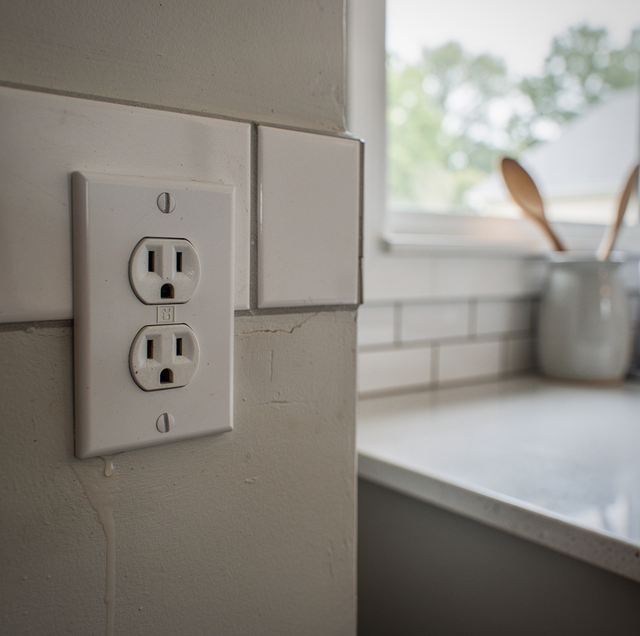
Wiring does not wear out on a schedule you can watch. Copper inside a wall can carry current for decades while its insulation, its connections, and the panel feeding it age at their own pace, and the household keeps adding load. The signs that old wiring needs upgrading are the places where the mismatch shows up: a breaker that will not stay on, a plate that feels warm, lights that sag when a motor starts. Six of them are a planning question; the seventh, heat at an outlet or switch, is a reason to stop using that device today. The table below sorts each sign by what it means and the step it calls for.
| Sign | What It Means | What to Do |
|---|---|---|
| Breakers trip or fuses blow repeatedly | The circuit is carrying more than its wire is protected for, or something on it is faulting | Stop resetting it by habit and have that circuit tested |
| Two-prong outlets throughout | The branch wiring has no equipment ground wire | Plan grounded circuits or shock protection, starting with kitchens and baths |
| Warm or discolored outlets and switch plates | A connection or device behind the plate is turning current into heat | Take the device out of service and call an electrician |
| Lights dim when a large appliance starts | Startup draw is pulling voltage down on a shared circuit or a small service | Notice whether one room dips or the whole house does |
| A fuse box or small main service | Total supply was set for an earlier generation of appliances | Ask for a load calculation ahead of any big new appliance |
| Extension cords and power strips as permanent fixtures | Rooms were given too few outlets for what they now power | Add outlets or circuits in place of more cords |
| Aluminum branch wiring | Terminations at devices can loosen and run hot over years | Have the connection points assessed for repair or replacement |
Why an Older House Was Wired for a Different Load
A house is wired around what it has to power on the day it is built. Each branch circuit pairs a wire size with a breaker or fuse matched to it: 14-gauge copper with 15 amps, 12-gauge copper with 20. The breaker opens before the wire gets hot enough to damage its insulation.
A kitchen wired for a range and a toaster now runs a microwave, a dishwasher and an air fryer, and a bedroom may carry a space heater on the same run. When the load exceeds the circuit's capacity, the breaker trips. Repeated trips on one circuit can result from a load larger than the circuit, a short or ground fault somewhere on it, a loose connection heating the breaker, or a worn-out breaker. Only testing separates them.
The age of the house changes where that search begins. An older or historic house can still have aluminum branch circuits and a panel sized below what the household now draws, so a trip there raises questions about the whole system as well as the one circuit. A newer house sizes its service for more recent loads and runs copper on its branches, so the same trip starts the search at one circuit and whatever is plugged into it, with a fault, a worn breaker, or a service outgrown by new appliances still on the list.
Heat at a Connection Is a Stop Sign
Current moving through a tight, clean connection makes very little heat. A loose terminal screw, a worn outlet whose contacts no longer grip a plug, or a push-in terminal that has relaxed adds resistance at one point, and resistance turns current into heat right there. Heat oxidizes the metal, oxidation adds resistance, and the joint runs hotter each time it carries load.
That cycle shows on the surface in a handful of ways: a plate that is warm to the hand, a tan or brown tint around one slot, a plug that is hot when you pull it, a buzz or crackle from the box, or a smell like hot plastic with no obvious source. A loose connection can overheat without drawing enough current to trip a protection device, because the heat comes from the joint's resistance rather than an overload. A breaker that has never tripped is no proof the connections behind the plates are sound.
A warm, buzzing, or scorched outlet can ignite the wood and insulation around its box, so stop using it, leave the cover plate on rather than looking behind it, and let a licensed electrician open and repair it.
If smoke appears, or a burning smell keeps returning, leave the house and call the fire department from outside.
Grounding and What a Two-Prong Outlet Lacks
A three-prong outlet has a round third slot connected to an equipment ground, a separate wire running back to the panel. When a cord frays or an appliance fails inside, and its metal case becomes live, that wire gives the stray current a low-resistance path home, so the breaker trips instead of the case staying energized until someone touches it.
A two-prong outlet sits on a circuit without that wire. Everything plugged into it works, which is why the gap goes unnoticed. What is missing is protection that stays invisible until something fails.
There are two routes to closing the gap. New grounded circuits can be run to the rooms that need them. Ground-fault protection, known as GFCI, can be added to an ungrounded circuit; it cuts power when current leaks from its intended path, protecting people against electric shock when no ground wire is present. It does not give surge protectors or computer equipment the ground they are built to use, so rooms full of electronics may still need a grounded circuit.
Wiring Types That Date a House
The material behind the walls sets which signs deserve attention first. Knob-and-tube wiring runs single conductors through porcelain tubes and along porcelain knobs, spaced apart so heat escapes into open air in the wall cavity. It has no ground, and insulation blown into those cavities later traps the heat it was designed to shed. Cloth-covered cable has rubber insulation under a woven braid, and that rubber can turn brittle and crack when an electrician or a remodeling crew disturbs it. Early plastic-sheathed cable carried two conductors and no ground wire.
Aluminum branch wiring was installed in some homes from the mid-1960s to the mid-1970s. Aluminum expands and contracts under load more than copper does, and it forms an oxide at its surface; both loosen and heat the connection at each outlet, switch, and splice. The weak points are the ends of each run, where aluminum meets a terminal.
This is where house age changes what one sign means. In an older or historic house that still has aluminum wiring, a single warm plate is used for every connection in the house, so it is a reason to look at all of them. In a newer house wired without aluminum, the same warm plate is one device that failed.
Panel and Service Capacity
Service is the size of the connection between the utility and your house, stated in amps and printed on the main breaker or the panel label. Services of 30 and 60 amps, fed through fuse boxes, belong to an earlier era of house building. A 200-amp service is a standard size for a new single-family house.
A small service shows up as dimming lights and a limit on what you can add. A motor draws a surge several times its running current for a fraction of a second as it starts. On a shared circuit, that surge pulls voltage down, and every light on the circuit dips. A dip in one room when the refrigerator kicks on is a circuit layout issue or a loose connection on that circuit. A dip across the whole house each time the air conditioner starts points toward the service: its size, a connection at the meter or the panel, or the supply reaching the house.
The capacity question becomes sharper when you plan for a heat pump, an induction range, or a car charger. A load calculation adds up what the house draws, compares it with the service, and decides whether the new appliance fits or the service has to grow first.
Partial Upgrade or Full Rewire
The choice follows the kind of problem the house has. A capacity problem, meaning a small service, a full panel or too few circuits, can be solved without touching sound branch wiring. A service upgrade, a new panel, dedicated kitchen, laundry, and bath circuits, and outlets where cords now run can bring the house up to its load while the existing runs stay put.
A wiring-type problem is different because it runs through every wall. Knob-and-tube, brittle cloth-covered cable, or ungrounded cable in poor condition throughout the house cannot be fixed one room at a time without leaving the rest in place, so confirming one of them moves the job toward a full rewire. A new panel feeding old ungrounded wire adds capacity and leaves every run behind the walls as it was.
Aluminum sits between the two. An electrician can repair each connection point with connectors rated for joining aluminum to copper, or replace the aluminum runs outright; the condition of the terminations and how you plan to use the rooms decide which. A rewire opens walls and ceilings in spots to fish new cable, then patches them, and occupied rooms can be done in phases.
What an Electrician's Evaluation Covers
A useful evaluation starts at the panel. With the cover off, the electrician checks for scorching, rust and water tracks, two wires clamped under a terminal built for one, and breakers larger than the wire they protect.
From there it moves outward: the grounding connection and the bonding of water and gas piping, a sample of outlets and switches opened to see the wire type and the condition of the terminations, a plug-in tester for polarity and missing grounds, and a look through the attic and basement for old wiring types and splices left outside a box. Some electricians add a thermal camera to find a hot connection before it discolors a plate.
For a week before the visit, write down every trip: which breaker, what time, and what was running. A pattern tied to a single appliance distinguishes an overloaded circuit from a fault that trips at random.
The result is a list sorted by urgency: hazards to fix now, capacity to plan for, and upgrades you can schedule at your convenience.
Frequently Asked Questions
Look at exposed cable in an unfinished basement, attic or garage without touching it. Aluminum cable has "AL" or "ALUMINUM" printed along its outer jacket at intervals, and that marking is readable from a step ladder with a flashlight. Leave outlet covers and the panel closed.
Not by itself. A dimmer sheds part of the power it controls as heat through its faceplate or metal fins, so mild warmth during use is normal for one. A dimmer that is hot to the touch, buzzes, or discolors its plate is the same warning, and so is one controlling more bulb wattage than the rating printed on it.
No. The adapter's metal tab or ring is meant to sit under the cover plate screw, so it is grounded only if the metal box behind the plate is grounded. In a house wired without ground conductors, that tab connects to nothing and the third prong protects nothing.
A fuse matched to its wire protects that wire as well as a breaker does. The danger is the fix people reach for when a 15-amp fuse keeps blowing: screwing in a 20- or 30-amp fuse, which can cause the wire to overheat. Type S fuses use size-specific adapters that stop a larger fuse from fitting the socket.
That pattern points to a loose or broken neutral at the service, on a shared circuit, or on the utility side of the meter. Voltage then divides unevenly between the two halves of the service, and one side rises high enough to damage electronics. Unplug sensitive equipment and call the electric utility or an electrician the same day.
Yes, as an added layer. An arc-fault breaker, called an AFCI, reads the current for the erratic pattern of arcing at a damaged cord or loose connection, a current too small to trip a standard breaker. It can be added at the panel on existing circuits, though an old circuit with a hidden fault can trip it until that fault is found.
A panel and wiring upgrade scoped from an evaluation — service size, grounding, and each tripping circuit checked first, so the work covers what your house draws today. Eagle Home Renovation Inc. serves Richmond and surrounding areas. License #2705181053. Call (804) 538-3334.