
How Replacement Windows Improve Energy Efficiency
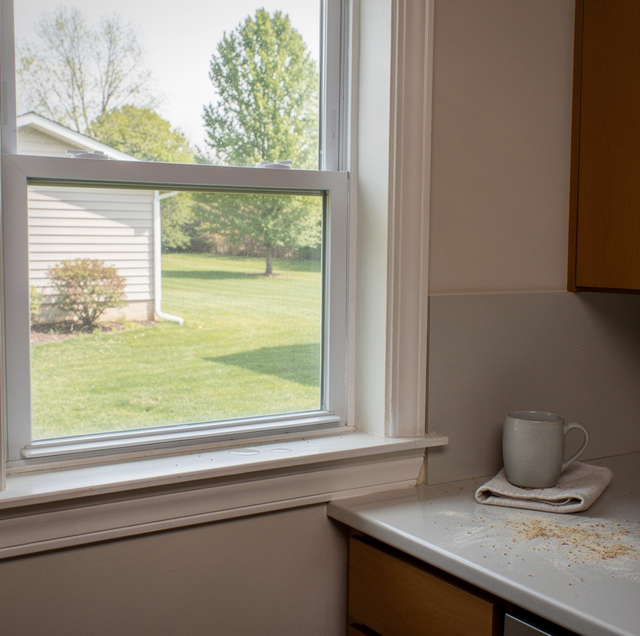
Hold your hand an inch from an old single-pane window on a cold morning, and you can feel the room losing a fight it never had a chance to win. The glass is cold to the touch, and a thin ribbon of air slides down its inside face and pools on the floor. That draft is not a leak the way a dripping faucet is; it is heat moving through the glass and frame by simple physics, and understanding that physics separates an upgrade that pays off from one that just looks nicer.
How Heat Actually Moves Through a Window
Heat crosses a window three ways: conduction through the glass and frame, convection as air currents form against a cold surface, and radiation as warmth passing directly through the glass toward the colder side. A single pane resists none of these well. Glass conducts heat readily; a single sheet does nothing to slow the convective loop that forms as air chills against it, and clear glass passes long-wave radiant heat with little resistance.
Every feature built into a modern replacement window targets one or more of these paths: a second pane interrupts conduction with a layer of trapped gas, a coating blocks radiant transfer without dimming the view, and a better frame and seal shut down the air movement that lets conditioned air walk out of the house. These fixes work far better stacked together than alone, which is why a window's overall rating always describes the assembly, not any single part.
What Double- and Triple-Pane Glass Actually Changes
A double-pane unit seals two sheets of glass around a spacer bar, trapping a pocket of gas between them. That gap does the real work: still gas is a poor conductor, so heat has to cross an insulating buffer instead of a solid sheet. A triple-pane unit repeats the trick with a second gap, slowing conduction further but adding weight to the frame and hardware supporting it.
The jump from single to double pane is large, the difference between one insulating layer and none. The jump from double to triple is smaller, reflecting diminishing returns relative to the first gap. Triple-pane earns its keep in extreme cold or where road noise matters as much as the thermostat, but for most houses the move from failing single-pane glass to a well-built double-pane unit accounts for most of the improvement a homeowner will feel.
Low-E Coatings and Gas Fills Change the Assembly Without Changing the View
A low-emissivity, or low-E, coating is a thin metallic layer, thinner than a human hair, applied to one glass surface inside the sealed unit. It reflects long-wave radiant heat back toward its source while still letting visible light through, so the glass looks clear even though it behaves very differently from plain glass. In winter, it bounces indoor heat back into the room; in summer, it reflects the sun's radiant heat before it becomes indoor heat, which matters most on west-facing glass that drives cooling costs for months at a stretch in a hot, humid climate. Manufacturers tune coatings to the climates they're sold into, so ask what a given coating is built for rather than assuming every low-E label performs the same.
The gas fill between the panes, usually argon or krypton, is denser than plain air and conducts heat more slowly, which is why a sealed unit outperforms two panes with ordinary air between them. Krypton insulates better than argon but costs more, so it mostly shows up in narrow-gap triple-pane units. Argon covers most residential replacement windows because it delivers most of the available gain at far less complexity.
Frame Material Carries as Much of the Job as the Glass
A strong glass package underperforms behind a poor frame because the frame is a continuous thermal bridge around the window's entire perimeter. Vinyl frames use hollow chambers filled with still air, sometimes reinforced with insulating foam, to slow conduction the way gas fill does between the panes. Fiberglass conducts less than vinyl and expands and contracts less with temperature swings, helping the seal stay intact over decades. Wood insulates well but needs upkeep to prevent joint swelling. Aluminum conducts heat fastest of the common options; a bare aluminum frame can undercut an excellent glass package unless it includes a thermal break, a strip of non-conductive material interrupting the metal's path from outside to inside.
No frame wins every situation; the choice trades cost, upkeep, and span against thermal performance.
Why Installation and Sealing Decide the Real-World Result
A window's lab rating describes a unit tested in a frame built for the test, not the rough opening it eventually sits in. The gap between rated and measured performance in a real house comes down almost entirely to installation. Flashing has to shed water away from the opening, insulation has to fill the gap between frame and framing lumber without voids, and an air seal has to run continuously around the whole perimeter, inside and out.
A window installed with a compressed or missing air seal behaves like an older unit, no matter how good its glass is, because the air movement that carries conditioned air out of the house occurs around the window, not through the glass. Marketing rarely mentions this: the rating assumes proper installation, and a skilled crew handling flashing, insulation, and air sealing does as much for the result as the glass itself.
Why Old Single-Pane or Poorly Sealed Windows Leak Conditioned Air
Older double-hung windows were built around moving parts: a sliding sash, a rope-and-pulley or spring balance hidden in the jamb, and a meeting rail where the sashes overlap. Every moving part needs clearance, and clearance is a path for air. Weatherstripping was meant to close that gap, but the felt, vinyl, or foam strips in older windows compress and lose their spring over the years of use; once they stop rebounding, air moves through on windy days no matter how tightly the sash appears to be shut.
Single glazing compounds the problem. A single pane offers roughly half the insulating value of a sealed double-pane unit and none of the gas fill's benefits, so even with intact weatherstripping, heat still leaks through the glass faster. Add a frame that has swelled, warped, or pulled out of square, and the sash no longer seats evenly against the stops, leaving a gap no exterior caulk can close. Thin glass plus a leaky, aging frame is why an old window can feel like an open vent even when it looks shut.
Setting Realistic Expectations: Ratings vs. Marketing Claims
Two ratings matter most for comparison: U-factor, which measures how readily the whole assembly conducts heat (lower is better), and solar heat gain coefficient, which measures how much solar heat passes through (lower in hot climates; higher can help in cold ones). Both describe the assembled unit- glass, spacer, gas fill, and frame together- a more honest comparison than any single claim about the glass alone.
Marketing built around a single percentage point rarely states its baseline. A claim comparing new low-E glass against decades-old single-pane glass in a leaky frame will always look bigger than the same product replacing a mid-life window that just lost its seal. The actual gain depends on what's being replaced, how large the openings are relative to the whole envelope, and how tight the installation is. Windows are one part of a home's thermal envelope alongside attic insulation and duct sealing, so weigh replacement as one piece of a larger picture, not the sole lever on a utility bill.
A fair way to estimate gains is to compare the U-factor of the existing windows with the replacement's U-factor, weighted by the home's glass area relative to its total exterior surface area. A home with modest window area will see a smaller share of its energy use tied to windows in the first place, no matter how dramatic the upgrade looks on paper.
Benefits Beyond the Energy Bill
Energy performance is the headline, but it isn't the only change when old glass comes out. Sound transmission drops noticeably, since the sealed gap and gas fill that slow heat transfer also interrupt sound waves passing easily through thin, single-pane glass; laminated glass cuts noise further still. Condensation on the inside face becomes far less common, since a warmer inner pane surface sits above the dew point more often, cutting the wood rot and mold risk chronic condensation feeds over time. Low-E coatings also block a portion of the ultraviolet light that causes fading in carpets, furniture, and artwork near sunlit glass. None of this is why most homeowners start the project, but it's often what stands out most once new windows are in.
What This Means for Deciding on a Project
The honest version has two sides. Replacement glass, coatings, and gas fills are real, measurable improvements over aging single-pane glass, and a correctly installed unit with a tight air seal will outperform an old window by a wide margin. At the same time, the actual improvement any household sees depends on what's being replaced, how the unit is installed, and how the rest of the house is insulated. Read manufacturer percentages as a range, compare U-factor and solar heat gain coefficient side by side, and ask how the installer handles flashing, insulation, and air-sealing. Glass and coatings do their part; the install crew decides how much of that potential shows up on a utility bill.
Frequently Asked Questions
A small amount of argon diffuses out through the seal each year, typically estimated at around 1 percent for a quality unit, which is why manufacturers build that slow loss into a window's rated performance. A unit that has lost some gas fill still performs better than an air-filled unit of the same construction; it's a sudden fog between the panes, not gradual diffusion, that signals a failed seal needing attention.
A well-fitting storm window creates a second air gap in front of the original glass, reducing conductive and convective losses and bringing an old single-pane window closer to double-pane performance with a fraction of the work. It doesn't add a low-E coating or an inert gas fill, so it falls short of a true insulated glass unit, and does nothing for a frame that has already rotted or racked out of square.
Yes. South- and west-facing glass receives far more direct solar heat over the course of a day than north-facing glass, so a solar heat gain coefficient chosen to reject summer sun matters most on those exposures, while north-facing units can use a coating tuned to retain winter warmth instead. Mixing coating types by orientation is common practice, since one formula rarely suits every wall of the same house equally well.
Most homeowners notice the comfort change- less cold radiating off the glass, fewer drafts near the sash- before they can measure any change in a utility bill, because comfort responds to the radiant and convective improvements right away while a bill reflects a full season of use and other loads like the water heater. A full heating or cooling season is the realistic window for judging the energy-cost side.
Aftermarket window film can reduce solar heat gain and glare on existing glass with far less effort than a full replacement, but it's applied to one surface after the fact rather than sealed inside an insulated unit, so it doesn't provide the conductive resistance that a gas-filled double-pane assembly does. Some films can also void a manufacturer's warranty if applied without approval, making it a partial fix for solar gain, not a substitute for the glass package.
A properly sealed installation should eliminate rough-opening drafts, so a persistent draft after replacement usually traces to one of a few causes: insulation stuffed rather than properly filled around the frame, leaving voids; an interior air seal skipped because the exterior looked finished; or a sash ordered slightly undersized and shimmed in a way that leaves a gap at the meeting rail. Any of these is a callback issue for the installer to fix, not a defect in the window itself.
Schedule a window efficiency assessment — get a clear look at which glass, frame, and sealing upgrades make sense for your home. Eagle Home Renovation Inc. serves Richmond and surrounding areas. License #2705181053. Call (804) 538-3334.
